Research to Practice Program
What is the Research to Practice Program?
The Research to Practice Program engages the higher education community in conducting investigative green building research and transferring outcomes into practice by developing replicable research and education tools.
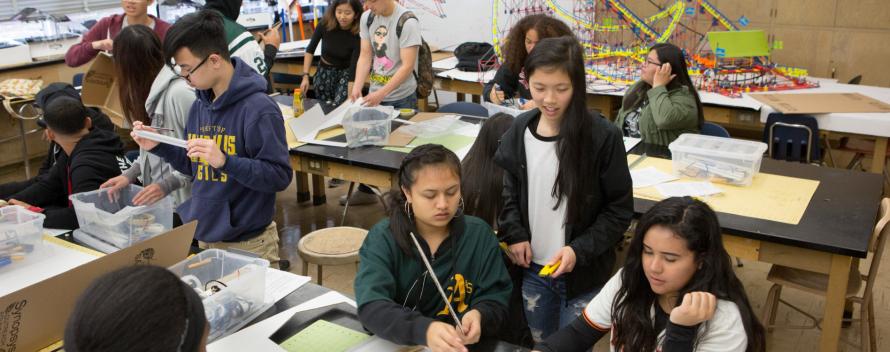
From Fall 2011 through Spring 2012, teams from 35 higher education institutions participated in the Research to Practice Program pilot, representing more than 300 individuals and studying nearly 450 buildings. Teams brought together students from architecture, engineering, real estate development, urban planning, interior design, construction management, building and construction technology, energy management, environmental psychology, historic preservation, policy, economics, physics, environmental science and biology.
Scholarship Awardees
Iowa State University and Sonoma State University were awarded
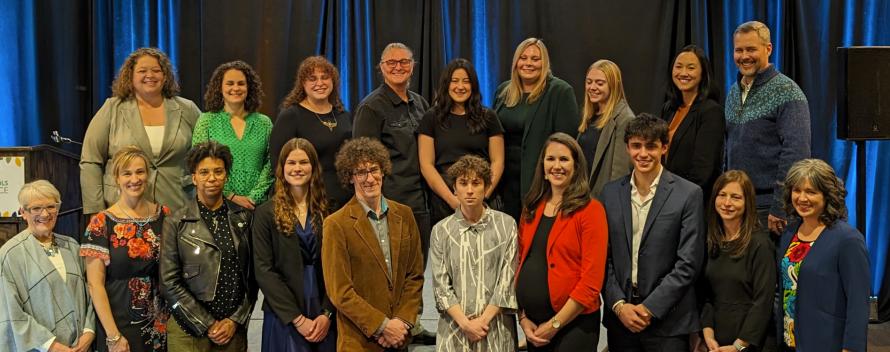
Greenbuild 2012 scholarships for their outstanding efforts in the Research to Practice Program. Each school sent three representatives to USGBC’s Greenbuild International Conference & Expo in San Francisco.
Outcomes: Tools & Resources for the Higher Education Community & Beyond
Nine universities completed both Phases I and II of the Research to Practice Program, addressing topics including post-occupancy behavior, energy use, occupant comfort, stormwater management, and more. During Phase I, teams focused on conducting research; during Phase II, they transferred research outcomes into research and education tools to be used or replicated by others. Explore the resources developed by each participating school:
Iowa State University (scholarship awardee): Methods for reducing campus building electricity usage
Sonoma State University (scholarship awardee): On-campus LEED for Existing Buildings readiness study and education
Hawaii Pacific University: Assessing on-campus building occupant comfort
North Carolina State University: Post-occupancy evaluation of a daycare center
Southern Polytechnic State University: Building systems evaluations and performance improvements on three international campuses
Universidad Iberoamericana: Campus application of LEED for Neighborhood Development
University of Florida: On-campus post-occupancy evaluation
University of Texas at Austin: Rating system and metric concepts to support green, historic preservation
University of Toledo: Tools for evaluation of rainwater harvesting systems
Below are executive summaries from Phase I research taken directly from team reports. Phase II summaries, reports, and outcomes can also be viewed. The most successful teams refined their research and created Phase II in the spring of 2012.
Colorado State University Phase II Roadmap
The Institute for the Built Environment (IBE) at Colorado State University piloted Phase II of Research to Practice in the fall of 2011. This roadmap outlines successful procedures, sequence of work, development of educational products with clear learning objectives, and lessons learned. This roadmap intends to provide guidance to teams embarking on Phase II of Research to Practice project development, the creation of “teaching case studies”. The goals of a Teaching Case Study are to convey general principles, to illustrate the application of these principles in a specific situation, and to give learners the tools to apply these principles in their own unique situations. Teaching Cases include issue-based stories and guided analysis.
Download
Research to Practice Program Phase 1 Executive Summaries
From September through December of 2011, university teams from across the country and globe participated in Phase I of the Research to Practice Program, conducting detailed research on a variety of on-campus green building topics, including return on investment, post-occupancy behavior, energy use, occupant comfort, storm water management and more. Multi-disciplinary teams were composed of undergraduate, graduate and Ph.D. candidates with various academic backgrounds. Many of the Phase I reports and conclusions will support recommendations to university sustainability councils for improving the built environment and campus quality of life.
Download